

Winter
Condintions
Impacts of Road De-Icers on Colorado’s Environment and Ungulates
Roadside and Aquatic Impacts
Soil and Vegetation: Salt buildup dehydrates plant roots, disrupts nutrient uptake, and scorches foliage, leaving dead strips of vegetation and inviting invasive weeds to take over.
Streams and Aquatic Life: Runoff carries chloride into streams, harming sensitive trout and aquatic insects, while messing with oxygen levels vital for their survival.
Wildlife Attraction: Salty slush acts like a magnet for animals, drawing them dangerously close to roads, increasing collisions and disrupting their natural habits.
Sand Use: While sand improves traction, it clogs stream beds and smothers fish eggs, threatening aquatic life.
Magnesium Chloride: Though it reduces total salt applied, it still leaves a lasting ecological footprint.
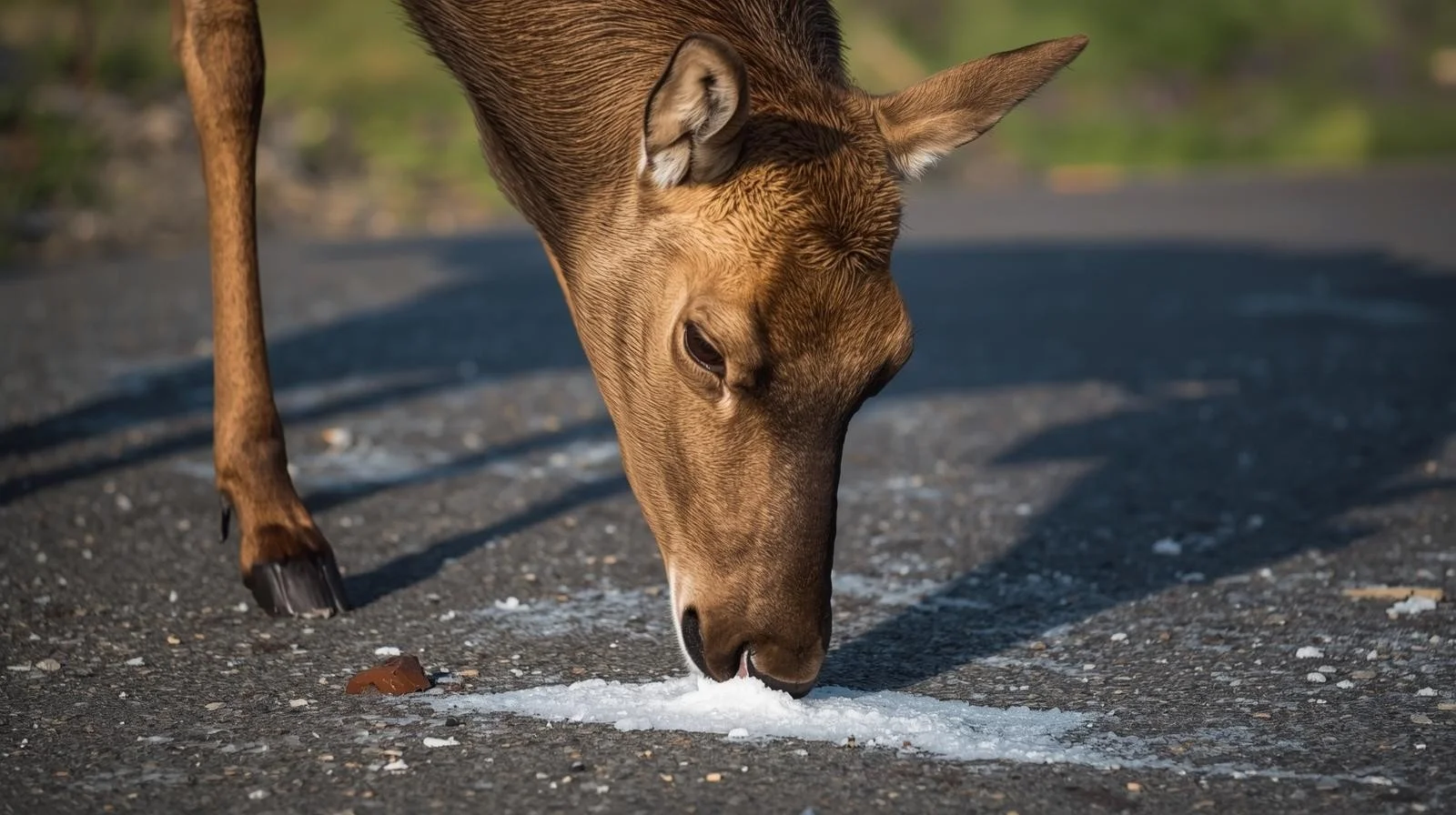
Ungulate eating salt off the roadwayEffects on Ungulates (Elk, Deer, Bighorn Sheep)
Winter Mineral Deficiency
Snow-covered forage limits mineral intake, especially sodium, crucial for their health.
Ungulates turn to low-sodium woody browse like aspen, willow, and conifer twigs.
Electrolyte and mineral loss peaks in late winter, stressing these animals.
Road Salt as an Attractant
Runoff pools at road shoulders, creating tempting mineral spots.
Plow spray coats snow berms, turning them into salty licks.
Meltwater concentrates minerals, mimicking natural licks but in risky, unnatural places.
Major Behavioral Impacts
1. Shifted Movement Patterns
Animals surprisingly move upslope toward roads instead of away.
Migrations stall at road edges as animals feed on salty slush.
Roadside feeding spots become habitual hangouts.
Highways act as “resource barriers,” slowing migration and increasing human-wildlife encounters.
2. Increased Vehicle Collisions
Salt attracts animals especially at dawn, dusk, after plowing, and during slush melts.
Animals linger in lanes, cross repeatedly, and show reduced alertness.
Data Highlights:
Bighorn sheep collision risk can spike 4× on salted roads in late winter.
Elk collisions rise sharply after plow days.
Mule deer strikes peak in February–March when forage is scarce.
3. Abnormal Grouping Behavior
Salt sources unnaturally concentrate animals:
Elk cluster on shoulders.
Deer linger in small groups near roads.
Sheep form tight groups on pavement cuts or runoff areas.
Consequences include:
Increased disease spread through nose-to-nose contact.
Heightened conflicts among rams or bulls.
Disrupted natural herd spacing.
Bighorns face greater risks due to vulnerability to respiratory diseases.
4. Changing Vigilance and Risk Perception
At salt spots, elk and deer:
Drop their guard.
Spend longer with heads down.
Get used to vehicles and people faster than usual.
Normally, roadside presence triggers high vigilance, but salt flips this behavior.
Dangerous hotspots include:
Lower Clear Creek roadside benches.
I-70 corridor near Georgetown.
Berthoud Pass shoulders.
Glenwood Canyon rest areas and ramps.
U.S. 24 and 285 near winter range edges.
5. Predation Dynamics
Road edges reshape predator–prey interactions:
Prey distracted by licking salt.
Predators like wolves, cougars, and coyotes ambush using traffic noise cover.
Carcasses from collisions provide unnatural food sources.
Effects include:
Predators drawn closer to roads.
Increased juvenile mortality.
Learned behavior where predators associate roads with food.
In wolf-free zones, coyotes may gain an advantage.
Broader Environmental Concerns
Fish populations, water drainage, habitat loss, and invasive species like cheat grass suffer collateral damage.
Mitigation Efforts
Colorado experiments with alternatives:
Beet and corn-based deicer's.
Increased sand use.
Less-toxic salts.
Timing applications to minimize chemical use and environmental harm.
Beet juice based deicer in use in Colorado.Bottom Line
Balancing human safety and environmental health is a tough act, with mobility often taking precedence—but awareness and innovation can pave the way for better solutions.
Safe Substitutes for Harmful Road De-Icers in Colorado
To protect Colorado’s environment and wildlife while keeping roads safe, here are some safer alternatives to traditional harmful road deicer's:
Beet Juice-Based De-Icers: Derived from sugar beet processing, these organic compounds lower freezing points and are biodegradable, reducing toxicity to plants and aquatic life.
Corn-Based De-Icers: Similar to beet juice, corn-derived products offer eco-friendly melting with less environmental impact.
Calcium Magnesium Acetate (CMA): Made from limestone and acetic acid, CMA is less corrosive and less toxic to vegetation and aquatic organisms.
Magnesium Chloride: While still a salt, it is considered less harmful than sodium chloride and is used in controlled amounts to reduce environmental damage.
Sand and Grit: Used to improve traction without chemical impact, though it requires cleanup to prevent sedimentation.
Potassium Acetate: Used mainly in airports, it is biodegradable and less harmful to the environment.
Colorado’s Department of Transportation and local agencies are increasingly adopting these alternatives, balancing effective ice control with environmental stewardship.
These substitutes help reduce soil and water contamination, protect aquatic ecosystems, and minimize harm to wildlife, including ungulates that are sensitive to salt exposure.
By choosing safer de-icing options, Colorado can maintain road safety while preserving its unique natural heritage.
Impacts of Road De-Icers on Colorado’s Environment and Ungulates
Road salts used for winter safety harm Colorado’s environment and wildlife. Salt buildup damages soil and plants, while runoff pollutes streams, threatening fish and aquatic insects. Salty roadsides attract animals like elk, deer, and bighorn sheep, increasing vehicle collisions and disrupting natural behaviors.
Ungulates face mineral deficiencies in winter and are drawn to salty runoff and plow spray, which mimic natural mineral licks but put them at risk near roads. This causes shifts in movement patterns, more collisions, abnormal grouping, and lowered vigilance.
Prey can be distracted by licking salt.
Predators ambush prey by using traffic noise as cover.
Carcasses from wildlife-vehicle collisions provide unnatural food sources.
Effects include:
Predators drawn closer to roads.
Increased juvenile mortality.
Learned behavior where predators associate roads with food.
Colorado is exploring safer alternatives to traditional salts, including beet and corn-based deicer's, calcium magnesium acetate, magnesium chloride, potassium acetate, and sand. These options reduce environmental damage while maintaining road safety.
Safe Substitutes for Harmful Road De-Icers in Colorado
To protect Colorado’s environment and wildlife while keeping roads safe, here are some safer alternatives to traditional harmful road deicer's:
Beet Juice-Based De-Icers: Derived from sugar beet processing, these organic compounds lower freezing points and are biodegradable, reducing toxicity to plants and aquatic life.
Corn-Based De-Icers: Similar to beet juice, corn-derived products offer eco-friendly melting with less environmental impact.
Calcium Magnesium Acetate (CMA): Made from limestone and acetic acid, CMA is less corrosive and less toxic to vegetation and aquatic organisms.
Magnesium Chloride: While still a salt, it is considered less harmful than sodium chloride and is used in controlled amounts to reduce environmental damage.
Sand and Grit: Used to improve traction without chemical impact, though it requires cleanup to prevent sedimentation.
Potassium Acetate: Used mainly in airports, it is biodegradable and less harmful to the environment.
In the Front Range, you can purchase these safe deicer substitutes at the following locations:
Beet and corn-based deicer's: These are often available at local hardware stores or garden centers. Natural Grocers in Evergreen (1291 Bergen Pkwy) may carry some natural or eco-friendly products worth checking.
Calcium magnesium acetate: Available online and at larger home improvement stores like The Home Depot.
Magnesium chloride: Available locally through suppliers like Colorado Materials Inc. in Longmont, CO.
Potassium acetate: Available online and at specialty suppliers; The Home Depot offers liquid potassium acetate for purchase online with possible delivery options.
Choosing eco-friendly deicer's helps protect soil, water, aquatic life, and wildlife, balancing human safety with preserving Colorado’s unique natural heritage.

A homeowner using corn based deicer on their property.